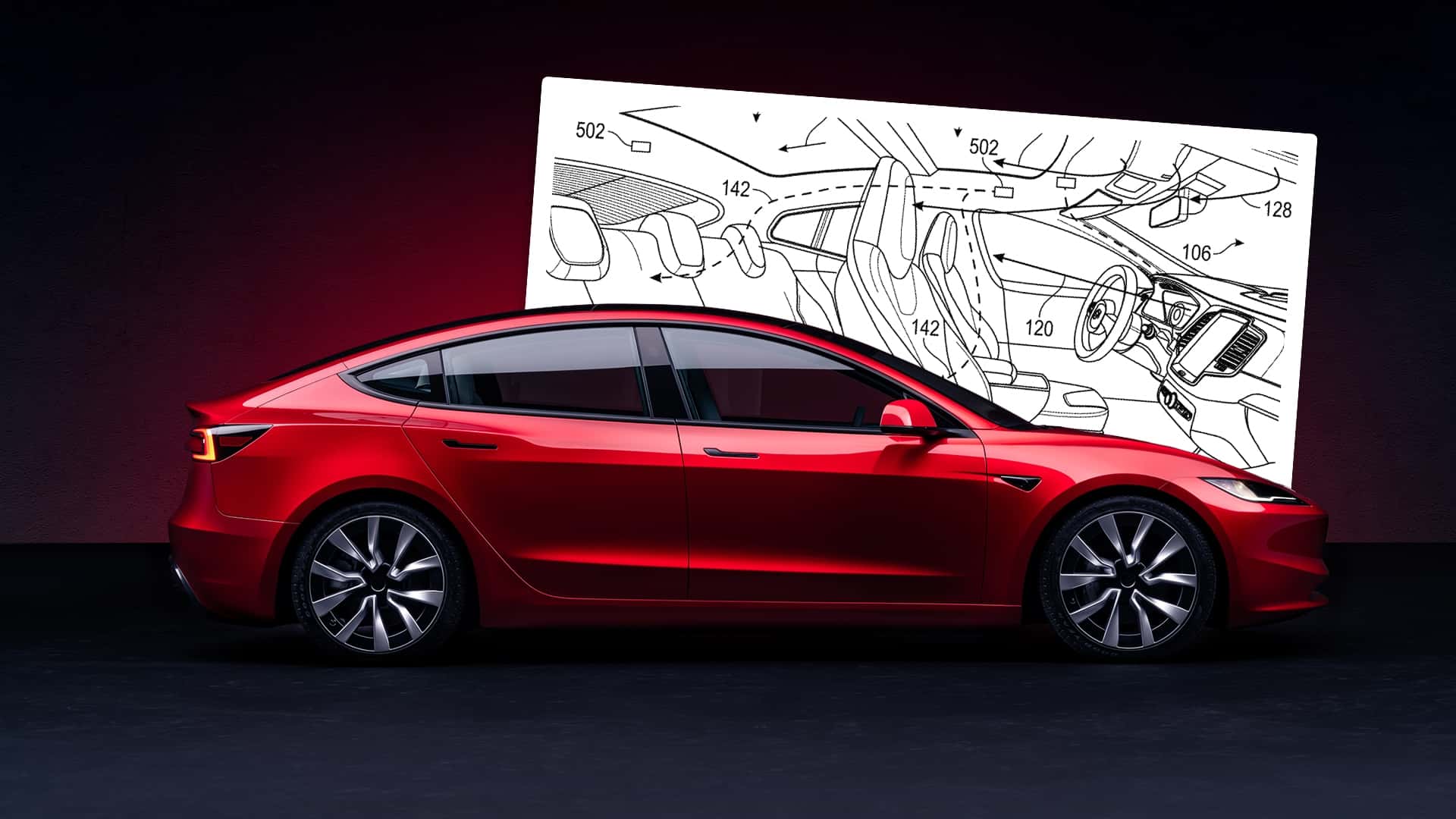
Tesla is exploring innovative ways to enhance the efficiency and range of its electric vehicles, especially during hot weather. A recently revealed patent details a system designed to actively remove hot air pockets from the cabin, thereby improving the performance of the climate control system and potentially extending driving range.
The core of this new patent involves integrating a suction unit into the vehicle's existing HVAC system. This unit would create a vacuum, or negative pressure, that can be directed to specific vents within the cabin. The primary goal is to target and extract areas of concentrated heat, often referred to as 'hot spots', which are particularly problematic on sunny days due to solar radiation through windows and accumulated heat within the interior space.
On a hot summer day, maintaining a comfortable cabin temperature consumes a significant amount of energy from the electric vehicle's battery. This energy expenditure directly impacts the vehicle's driving range. Tesla's proposed vacuum system aims to make this cooling process more efficient. By drawing hot air directly into the HVAC system, it can be conditioned and recirculated more effectively, reducing the overall energy demand compared to traditional cooling methods.
The patent application explains that this method is particularly relevant for larger vehicles with more interior volume, such as the Model X, which naturally require more energy to cool. The system is designed to equalize cabin temperature more uniformly, maximizing thermal comfort while minimizing energy consumption. According to data presented in the patent, this technology could potentially reduce the power draw of the HVAC system by as much as 7.4%. For instance, on a 104-degree Fahrenheit day, this could translate to a saving of approximately 127 watts, lowering the peak HVAC power consumption from 1,720 watts to 1,593 watts.
Furthermore, Tesla's patent suggests that the suction function could be intelligently controlled. The system could utilize sensors to detect temperature variations within the cabin, activating the vacuum only in the specific areas that require cooling. This adaptive approach would further optimize energy usage, ensuring that power is only consumed when and where it is needed.
While this is currently a patent and not a confirmed production feature, it highlights Tesla's ongoing commitment to innovation in electric vehicle technology. Improving range without resorting to larger batteries, complex aerodynamic modifications, or powertrain upgrades is a significant goal for EV manufacturers. Studies indicate that air conditioning can reduce an EV's range by up to 18% on a 100-degree day. If Tesla's vacuum-assisted cooling proves effective in production, it could offer a substantial benefit to owners by increasing usability and comfort without compromising range.
Fuente: Link
A favor
- Potential to increase EV range by improving cooling efficiency.
- Enhances passenger comfort by more effectively managing cabin temperature.
- Optimizes energy consumption by targeting specific hot spots.
- Adaptive system can intelligently activate based on temperature sensors.
- Innovative approach that doesn't require larger batteries or major hardware changes.
En contra
- This is currently only a patent and may not reach production.
- Potential for increased complexity and maintenance within the HVAC system.
- Effectiveness might vary significantly with different cabin designs and ambient conditions.
- Initial implementation costs could be high.
Tecnología Clave
- Sistema de succión para crear vacío en el habitáculo.
- Integración con el sistema HVAC existente.
- Sensores de temperatura para activación inteligente.
Beneficios Potenciales
- Mejora de la autonomía del vehículo eléctrico (EV).
- Reducción del consumo energético del climatizador.
- Mayor confort térmico en días calurosos.
- Optimización del uso de energía en vehículos de gran tamaño.
Estado del Proyecto
- Actualmente en fase de patente.
- Sin confirmación de implementación en modelos de producción.
- Demuestra el enfoque continuo de Tesla en la innovación.
Galería de Imágenes
Fuente: Link